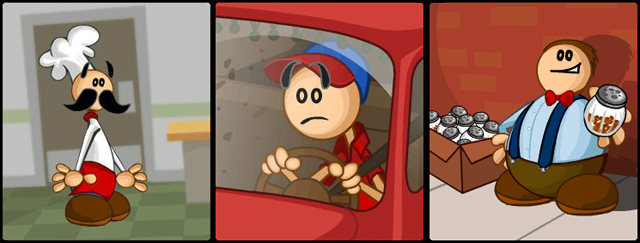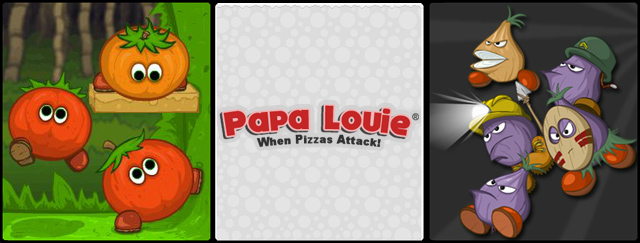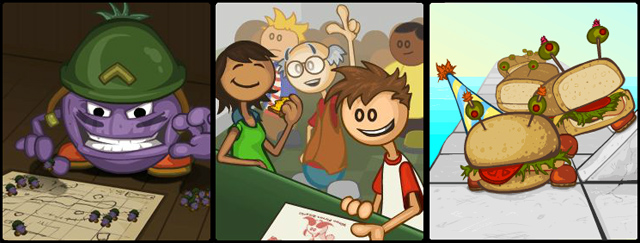




Flipline Rewind: Papa Louie: When Pizzas Attack!

Today marks the 20th Anniversary of Papa Louie and his first game, Papa Louie: When Pizzas Attack!
To celebrate, we thought it would be a great time to look back at how the game came to be, how we created Papa Louie, and the decisions we made along the way leading to the game’s release.
Introduction
When we started Flipline, we were focused on building websites and interactive visualizations, but we had always been interested in making games. In fact, the first time we worked together in college was on a game design project, and we collaborated on a few other games during our time there.
After college, adver-games were becoming popular, with web games appearing on sites like Candystand and Miniclip. Initially we thought designing adver-games could be another service we could offer alongside web development and other interactive media. At the time, we were most familiar with making games in Macromedia Director, but with Flash Player growing in popularity, we wanted to expand our skills and learn how to develop games in Flash.
We began teaching ourselves how to design and code in Flash, which at the time involved reading a lot of books and checking out the small handful of online tutorials we could find on personal blogs. Our original goal wasn’t to make a full-fledged game. Instead, we wanted to create a small demo for our website that we could show potential clients interested in adver-game development.
Building a platformer seemed like a great starting point to see what Flash could really do, and we thought designing a new character to build the game around would make the learning process more interesting.
The Birth of Papa Louie
As we experimented with platforming mechanics and got a generic character moving and jumping, we began thinking about ways to make the gameplay more unique. Rather than simply jumping on enemies to defeat them, we explored other ways the character could interact with them. One idea that stood out was letting the player deflect projectiles back at enemies.
Instead of swinging a bat or a racquet to hit balls at enemies, we thought about other things that a character could swing, and landed on a pizza chef using a pizza peel (or pizza paddle) to swing and hit projectiles.
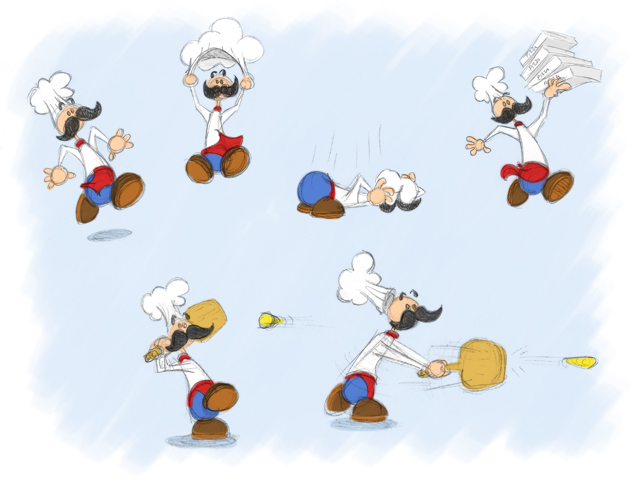
We intentionally designed our new pizza chef to look different from our usual artistic styles, giving him an unusual appearance that would make him stand out. We had previously designed characters with limited facial features in FlipChat and Dig-In (two projects we worked on together in college), so that continued with this new pizza chef. We took things a step further by giving him odd proportions, removing the legs and shoulders and originally drawing him with lumpy sausage fingers (which we eventually redesigned in later games). He was goofy and cartoony, and we felt like he could work as a mascot in a platformer game.
Crafting the World
Once we had our pizza chef, the next step was figuring out how to build the gameplay around him. We naturally thought of pizzas being the main type of enemy for our character, so to tie that into our chef wielding his pizza paddle, we wanted these creatures to spit wads of cheese at the player. Once the chef deflected the cheese back at the monsters, they would collapse down into harmless pizza boxes.
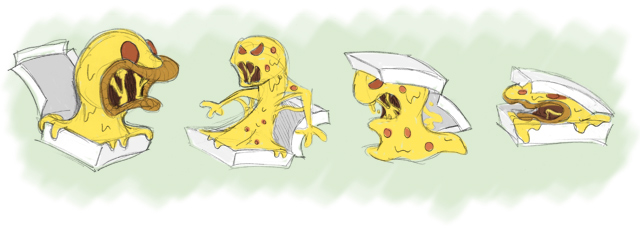
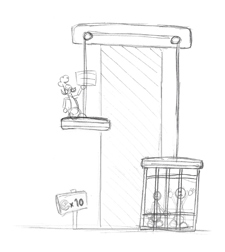
That mechanic led to another idea: Papa Louie could pick up and carry those pizza boxes throughout each level. We needed a reason for players to collect them all, so we came up with the idea of weighing down a switch or platform once he was holding enough boxes. This gave the player a different goal than just defeating all enemies or reaching the end of a level.
 If the game was just going to be a demo in our portfolio, we could have stopped there and just made a few levels with these mechanics. As we were developing these ideas though, we became more excited about the possibilities. We wanted to expand the game even further, and maybe turn it into an actual full game on its own instead of just being a proof-of-concept for future client work. To get there, we’d need to expand the variety of enemies and give the world a story and a purpose.
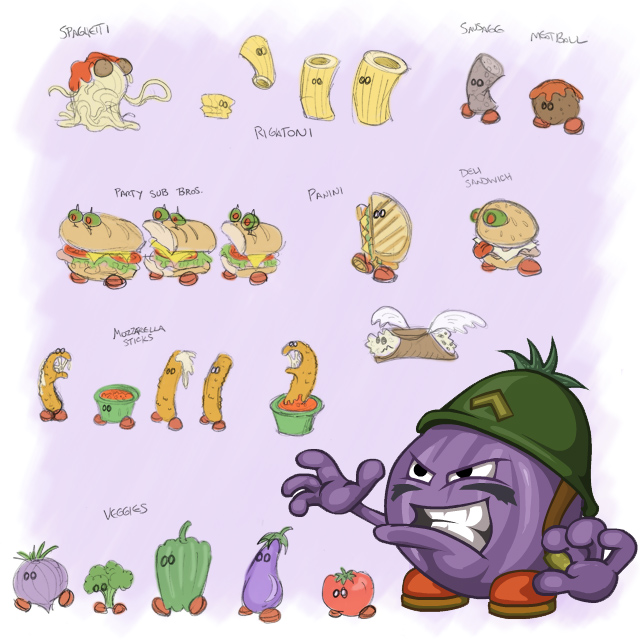
We initially explored all kinds of foods you would find in an Italian restaurant. Our sketches included various veggies, walking sausages, meatballs, mozzarella sticks, panini, and deli sandwiches.
We also needed a unique world for our chef to visit and for all of these food-themed creatures to inhabit. We themed levels and their designs around Italian foods as well, and looked for ways to give each area its own environmental twists. Marinara sauce could flow through saucy aqueducts, carrying pizza boxes along in their current. Jungle ruins could feature crumbling blocks, while underground mines could use switches and conveyor belts to move Papa Louie and the pizzas around.
We continued developing the theme of the game with a story centered around the pizza chef and his pizzeria. All of Papa Louie’s customers would need to be rescued, giving him a reason to travel through all of these strange environments. What had started out as a platforming demo was starting to feel like a complete adventure.
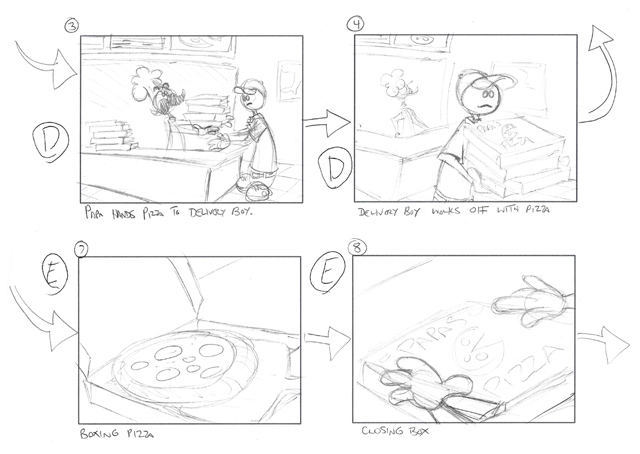
Development
With the core mechanics established, we started building basic prototypes using temporary artwork.
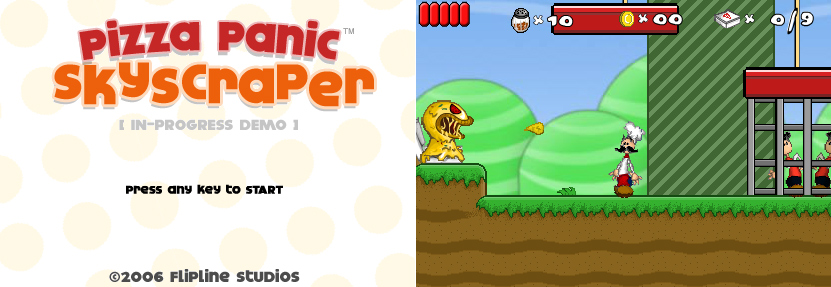
Once the gameplay was working, we turned our attention to the visuals for the levels themselves. We chose an isometric perspective to give it some visual flair, and help it stand out from other platformers with a unique look.
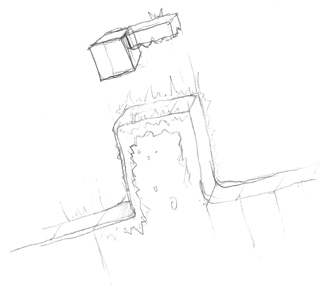 Although Flash was built around vector-based artwork, the Flash Player and web browsers at the time were not especially powerful. To keep performance manageable, we created the game’s artwork as pixelated bitmaps rather than relying on smooth vector graphics.
As the game expanded, we also needed a better way to build its increasingly complicated levels. Early versions of the levels were hand-coded, but that quickly became impractical as we added more detailed tilesets and more enemies.
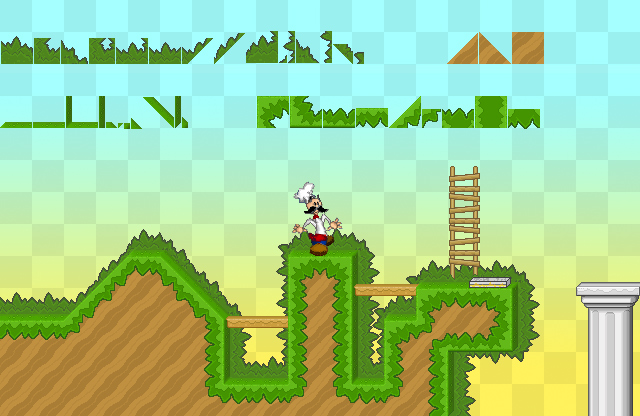
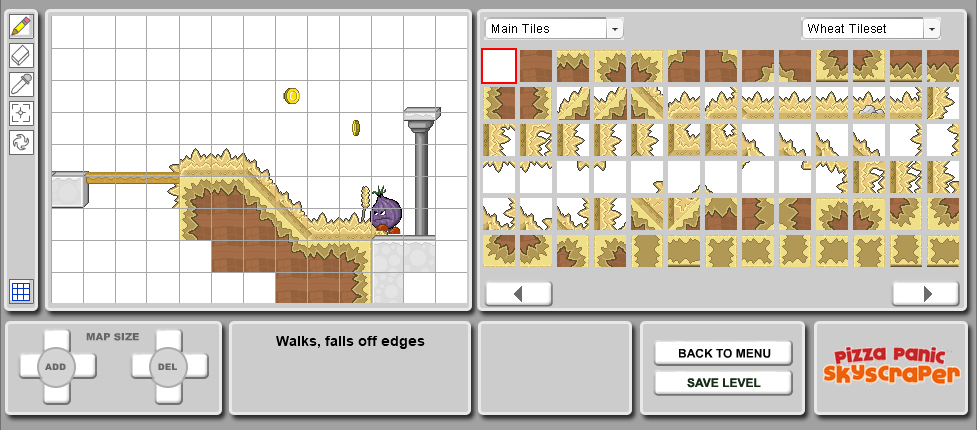
To make level design more manageable, we created a custom Level Editor for the game. It allowed us to switch between tilesets, place objects and enemies, and carefully draw each tile into the level. The editor was fairly rudimentary compared with the tools we would later build for the sequels and the Cactus McCoy games, but it made a huge difference. We could see how a level was shaping up as we worked on it, rather than relying on stacks of papers with diagrams and tables of numbers to look up how to place each tile and enemy.
We originally planned on a much more expansive world for the game, but the growing scope eventually ran into the limitations of Flash Player at the time. Performance and file size were becoming a concern, so we decided to scale back our plans. We focused on a smaller selection of enemies, and once we decided that Sarge would be the main boss, we expanded the role of onions by introducing several different varieties throughout the game.
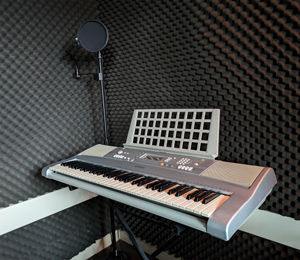 We had used a MIDI keyboard to record music for our college projects, so we decided to take a similar approach for our new game. Internet connections were slow at the time, and Flash games needed to stay relatively small, so we composed the soundtrack in short, reusable chunks that we could layer and sequence within Flash itself. While we didn’t use quite the same method in future games, that first soundtrack established the overall “sound” that we’ve continued to use throughout the Papa’s series.
As development progressed, we also worked through a few different names for the game and its main character. We originally intended to call it “Pizza Panic”, but another game with that same name had just recently been released. Once we settled on the idea of an adventure involving the entire apartment building and its customers, we briefly considered “Pizza Panic Skyscraper”.
Eventually, we decided that the game should be named after our new mascot character. He started out as “Papa Lucci”, but we ultimately landed on “Papa Louie” as the name of our adventurous pizza chef. Since we were already envisioning bringing these characters into future games, we added the subtitle “When Pizzas Attack” for this first adventure.
Releasing the Game
When the game was finally finished, there wasn’t really a straightforward way to release the game to the public. In those early days of browser-based gaming, there wasn’t an established market for selling, licensing, or distributing Flash games. In fact, most websites didn’t want to actually host Flash games because of the expensive bandwidth costs, so games spreading virally wasn’t really a thing yet.
Adver-games and short mini-games were the most common browser-based experience at the time. This was still the very early days of Flash games, and the main avenue for larger games was still to release a paid downloadable PC game through a publisher. While in the middle of development, we traveled to the Casual Connect gaming conference with dozens of promotional CDs featuring the game, hoping to meet with publishers and explore our options.
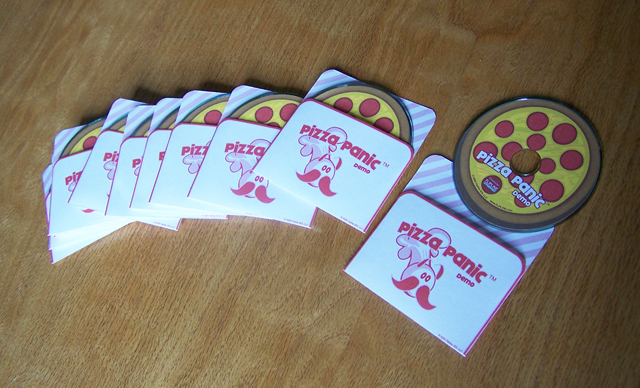
We spoke with a couple of websites who were interested in buying the game, but the offers weren’t what we had hoped for. Some didn’t want to pay anything upfront, while others wanted to own all of the rights and change the main character’s name.
We ultimately didn’t think it was worthwhile selling the game for what was being offered. Instead, we decided to try something different: We would create a new website and release the game ourselves. This way, we could keep the game as part of our portfolio, retain the rights to Papa Louie for potential future games, and try to find a way to earn some money from the game on our own.
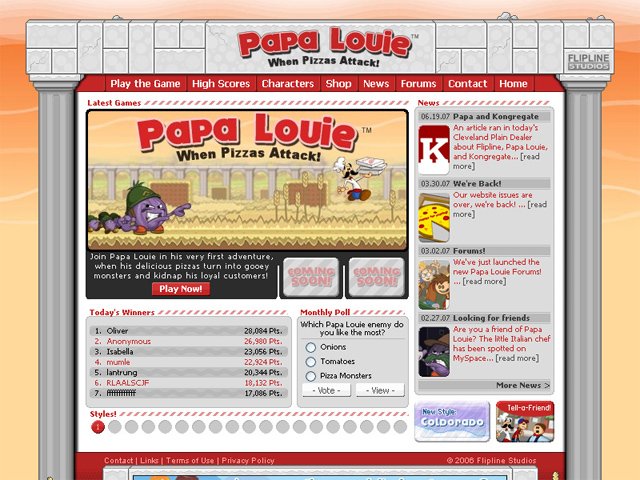
The Papa Louie Website
We designed our own site to host the game ourselves, where players could access the game, read character bios, and compete on custom high-score leaderboards that we connected to the game. Google AdSense had launched a couple of years earlier, so we also planned to put some advertising banners on the page to help pay for hosting the website.
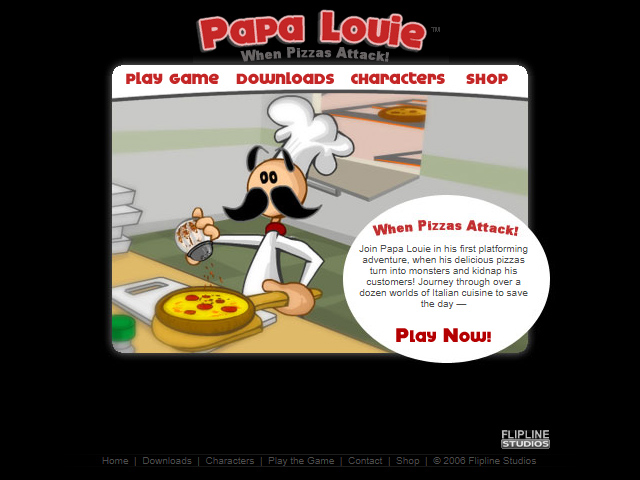
Once the game was ready, we launched a media blitz, sending press releases to as many websites, gaming blogs, and news sites as we could find. That effort brought some traffic to our site, but most of our visitors ultimately came from other gaming sites.
Since viral distribution of Flash games didn’t exist yet, smaller gaming sites would often feature it by framing our website within their own pages. This meant players could access Papa Louie directly from other sites, while our own website — including our advertising banners — appeared inside the frame.
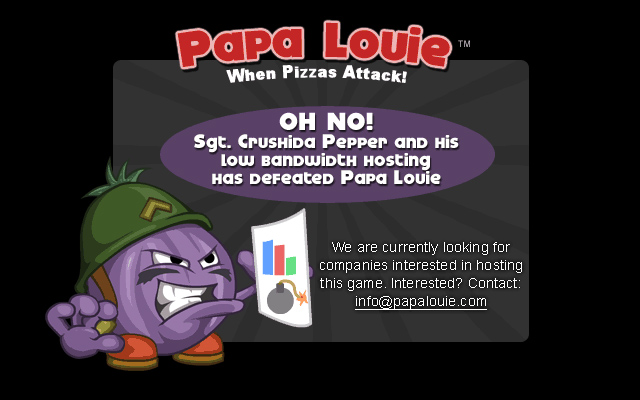
The game quickly became so popular that we regularly exceeded the supposedly “unlimited” bandwidth offered by our hosting providers. We had to switch hosts repeatedly just to keep the site running and the game accessible. Within its first month, the game had been played more than a million times, which was an incredible milestone for us and a remarkable achievement in those early days of Flash gaming.
The success of Papa Louie also came at a time when the browser gaming industry was beginning to change. Shortly after the release of the game, more websites dedicated to Flash games were appearing, along with new services and opportunities to earn money and fund game development.
Papa Louie became one of the first games available to play on Kongregate when the site launched. It was also one of the first games to use MochiAds for a new distributable version that other websites could host themselves. These developments made it easier to get the game in front of new audiences, and helped pave the way for how browser games would be shared and distributed in the years that followed.
Legacy of Papa Louie
It’s amazing to think that 20 years have passed since the release of Papa Louie: When Pizzas Attack! That first game set us on our path toward developing games full-time, expanding the Papa Louie universe with more platformers, and eventually creating the popular Gameria series.
The project began as a way to learn Flash, and as a tech demo to show future clients. Instead, it ultimately led to us developing our own original games, and no longer having to rely on client work.
Papa Louie’s goofy, cartoony design also proved to be surprisingly enduring. We were able to adapt that oddball style for more than 150 other characters over the years, creating a visual identity that remains undeniably connected to Papa Louie.
Most of all, we want to thank everyone who has played our Papa Louie games over the years. Whether you started with the original platformer or discovered Papa Louie through the Gameria cooking games or our mobile apps, your support has helped us continue building this crazy world and bringing its characters to life. Thank you for joining us in this journey with Papa Louie!
Papa Louie Trivia
As we revisited the game for this Flipline Rewind, we also uncovered a few more bits of trivia and interesting details from its development and release:
- Even though Flash Player was designed around vector graphics, computers and browsers at the time struggled to handle a lot of vector artwork on screen at once. We created the game’s artwork as pixel bitmaps to improve performance. As Flash Player became more capable, we eventually updated some of Papa’s artwork with crisper vector graphics while leaving the level backdrops and enemies as bitmaps.
- When we released the game on Kongregate, the site wanted something unique to set their version apart from the original and to give players a reason to come visit their site. We added collectible “Kongregate Coins” to each level that could tie into their new achievement system, which we would later include in the “Deluxe” version of the game on our own site (rebranded as “Papa Coins”).
- While Guppy Guard Express and Meteor Blastor were officially our first Flash releases, both were designed as quick mini-games to demonstrate what we could do for client work. They were also much simpler and more in line with the adver-games that were popular online at the time. We still consider Papa Louie: When Pizzas Attack our first proper full game.
- We originally planned a fifth world where Sarge would be stationed at Fort Onion with his minions. We had already designed part of the area, including blocks on pistons that popped in and out, cheese cannons, Army Onions patrolling the fort, and doors that required a certain number of pizza boxes to open. Unfortunately, the game kept crashing as we added more levels and features, pushing Flash Player beyond what it could handle at the time. We decided to scale back the size of the game, and moved Sarge to the Sausage Mines for his final boss battle. Fort Onion was saved for the eventual sequel, along with the door-switch mechanics, although the sequel no longer required pizza boxes to open the doors.
- When designing levels, we wanted some mechanics to make it easier for Papa Louie to bring pizza boxes along, and other mechanics that would make him have to leave the pizza boxes behind while he goes off to explore. This is why Papa Louie can climb ladders while carrying pizzas, but needs both hands free to climb ropes.
- Roy was originally going to follow Papa Louie through the levels, hiding in the background bushes and occasionally popping out to explain how to play. We eventually decided that having him interrupt so frequently would slow things down, so we limited his appearance to the beginning of the training stage, and placed the tutorials on signs throughout the world.